

What Is Dark Fiber 101 & When It Makes Best Sense

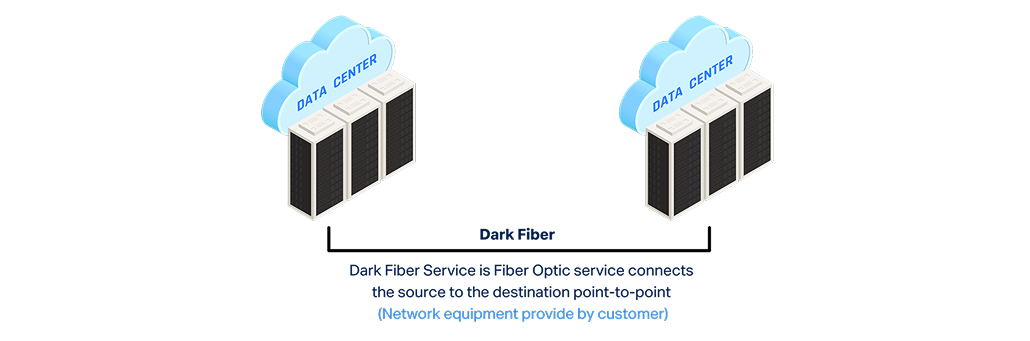
Dark fiber—also called unlit fiber or black fiber—is unused optical fiber cable laid by telecom providers but not activated with electronics. Think of it as raw fiber infrastructure you lease and “light up” yourself with your own equipment.
Unlike lit fiber (managed service with active transceivers), dark fiber gives you complete control over capacity, protocols, and performance. Telecoms built excess capacity in the 90s expecting demand—much remains unused today.


How Dark Fiber Works
- Lease the strand: Provider owns fiber, you lease a pair (one transmit, one receive).
- Add your gear: Install transceivers, muxes, switches at each end.
- Control everything: Set speeds (10Gbps to 400Gbps+), wavelengths, latency.
- No middleman: Direct point-to-point or ring connections.
Key difference: Lit fiber = turnkey service. Dark fiber = raw pipe + your engineering.
Dark Fiber vs Lit Fiber
| Feature | Dark Fiber | Lit Fiber |
| Control | Full (speed, protocol, latency) | Provider-managed |
| Bandwidth | Virtually unlimited | Tiered plans |
| Cost | High upfront, low recurring | Predictable monthly |
| Latency | Lowest possible | Slightly higher (provider overhead) |
| Scalability | Upgrade hardware anytime | Wait for provider |
| Maintenance | Your responsibility | Provider handles |
| Setup Time | Weeks (equipment install) | Days |
Top Use Cases
1. Data Centers & Hyperscalers
- Direct interconnects between campuses
- 400Gbps+ private links
- Zero-trust security (no shared infrastructure)
Example: Equinix to AWS Direct Connect over dark fiber.
2. Financial Services
- Ultra-low latency for High-Frequency Trading (HFT) trading
- Private networks between trading floors
- Disaster recovery replication
3. Healthcare & Research
- Picture Archiving and Communication System (PACS) imaging transfers (TB-scale files)
- Genomics sequencing pipelines
- Hospital-to-lab connectivity
4. Enterprise WAN
- Connect multiple campuses without MPLS
- Metro dark fiber rings for redundancy
- Video production studios
5. Broadcasting & Media
- 4K/8K live production feeds
- Stadium-to-ob truck links
- Post-production render farms
Pros of Dark Fiber
✔ Unlimited Capacity: Light multiple wavelengths (DWDM) for 100Tbps+ potential
✔ Lowest Latency: Direct path, no provider hops
✔ Future-Proof: Upgrade transceivers without digging
✔ Security: Private network, no ISP visibility
✔ Cost Savings Long-Term: No bandwidth premiums
Cons of Dark Fiber
X High Upfront Costs: $100K-$1M+ for metro runs + equipment
X Expertise Required: Need fiber optic engineers
X Maintenance Burden: Your team troubleshoots cuts, failures
X Limited Availability: Mostly metro areas, not rural
X Not typical SLA: Provider fixes cable, you fix electronics
Cost Breakdown (Example: 10km Metro Link)
Dark Fiber Lease: $5K-$15K/month
+Transceivers (100G pair): $50K one-time
+Mux/Demux: $20K
+ Install/Testing: $30K
Total Year 1: ~$150K
Year 2+: $60K lease only
Lit Fiber Equivalent: $20K/month fixed (no Capital Expenditure (CapEx))
When Dark Fiber Makes Sense
| GO DARK FIBER IF: | STICK WITH LIT FIBER IF: |
| 10Gbps sustained demand | <10Gbps needs |
| Latency <1ms critical | No CapEx budget |
| 3-5+ year horizon | Limited technical staff |
| In-house network engineers | Quick deployment needed |
| Metro/regional footprint | Rural/long-haul routes |

Real-World Example: Hospital Imaging Network
Problem: 3 hospitals transferring 50TB/day PACS images. Latency kills radiologist productivity.
Solution: 100km dark fiber ring with DWDM.
- Cost: $2.5M setup, $120K/month lease
- Result: 100Gbps links, <500μs latency
- ROI: 18 months (faster diagnoses = more patients)
How Fireline Helps with Dark Fiber
Fireline Broadband specializes in dark fiber leasing and activation:
- Metro dark fiber inventory across CA
- Turnkey lighting: We install transceivers + test
- Hybrid solutions: Dark + lit failover
- Healthcare/Hospitality expertise

Choose the Right Fiber Path Forward
Fireline Broadband network engineers help healthcare organizations evaluate dark fiber vs lit services against your clinical infrastructure needs—EHR performance, imaging transfers, telehealth reliability, and multi-campus redundancy.
We assess:
- Dark vs lit for your specific workloads (PACS TB transfers? HFT latency?)
- Provider credentials and route diversity
- Cost-optimized multi-site connectivity (direct hospital-to-lab links)
- Hybrid strategies combining dark fiber with failover circuits
Call our business team:877-347-3147
Learn more about our Dedicated Internet Solutions
Make infrastructure decisions with confidence, not guesswork.
Dark fiber is for bandwidth-hungry enterprises that value control over convenience. Perfect for data centers, trading, imaging—but overkill for most SMBs.
FAQs About Dark Fiber
Is dark fiber faster than lit fiber?
Yes—dark fiber has lower latency because it’s a direct point-to-point connection with no provider equipment or routing hops. Every piece of provider gear adds 10-100 microseconds. For HFT trading or PACS imaging where milliseconds matter, dark fiber wins. Regular business? Difference is negligible.
Do I need to dig trenches?
No—dark fiber uses existing buried/aerial fiber built during telecom expansions (90s dot-com boom). You lease strands that are already in place. Only new construction needs digging. Metro areas have abundant dark fiber inventory.
What’s the minimum speed?
Technically unlimited, but 10Gbps is practical minimum. Most transceivers start at 10/25/100Gbps. You can light multiple wavelengths (DWDM) on one strand for 400Gbps-100Tbps total capacity. SMBs rarely need more than 1Gbps.
How secure is dark fiber?
Most secure option—it’s a private fiber strand no one else touches. No ISP can see your traffic, inject malware, or log data. Perfect for HIPAA healthcare, financial trading, government. Only physical cable cuts are threats (rare with redundant routes).
Can small businesses use dark fiber?
Rarely—high upfront costs ($50K-$500K+ for equipment/installation) and need for fiber optic engineers make it impractical for most SMBs. Better for enterprises needing 100Gbps+ or microsecond latency. SMBs should stick with dedicated internet or lit fiber.
Dark fiber vs dedicated internet?
Dark fiber = raw fiber strand you “light” with your own transceivers (private links, full control). Dedicated internet = active internet service from provider (turnkey, general business use). Dark for hospital-to-lab imaging; dedicated for clinic EHR/telehealth.