Not all business internet is created equal. When fiber isn’t available at your location—or when you need connectivity faster than a construction crew can trench—fixed wireless offers a powerful, dedicated alternative.
Fireline Broadband delivers both technologies. We help businesses how to choose and match the right connection to their location, timeline, and performance needs.
This guide explains how fiber and fixed wireless work, compares their speed, reliability, deployment, and security, and helps you decide which one fits your business.


How Each Technology Works
What Is Fiber Optic Internet?
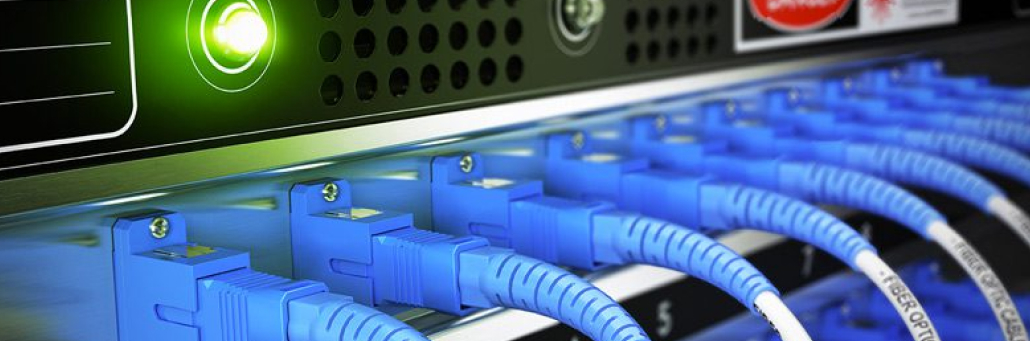
Fiber optic internet transmits data as pulses of light through thin glass or plastic strands inside a protective cable. Because light travels incredibly fast and encounters little resistance, fiber can deliver symmetrical speeds (upload equals download) up to 10 Gbps or higher .
Fiber is immune to electrical interference, weather, and signal degradation over distance. However, it requires physical cable runs—often underground—which means installation takes longer and depends on fiber already being near your building.
What Is Fixed Wireless Access (FWA)?
Fixed wireless delivers internet via radio signals transmitted from a local tower to a receiver mounted on your roof or exterior wall . It does not use cellular networks or satellites. Instead, it relies on a dedicated point-to-point or point-to-multipoint connection on licensed or unlicensed spectrum.
Because there is no trenching or cable pulling, fixed wireless can be deployed in days instead of months. It provides a dedicated, business-grade connection with low latency and high reliability—provided you have a clear line of sight to the tower.
Fiber vs. Fixed Wireless: Key Differences at a Glance
| Feature | Fiber Optic | Fixed Wireless (FWA) |
| Speed (symmetrical) | Up to 10 Gbps+ | Up to 10 Gbps (plans vary) |
| Upload performance | Excellent (matches download) | Very good (dedicated, not shared) |
| Latency | <5 ms (ultra-low) | 15–30 ms (low for wireless) |
| Reliability | Immune to weather and interference | Dependent on line of sight; minimal weather impact with licensed spectrum |
| Installation time | If not readily available: Weeks to months (trenching/permits) | Days (roof mount + alignment) |
| Availability | Limited to areas with existing fiber | Much wider; based on tower line of sight |
| Best for | Data‑intensive, latency‑sensitive ops | Backup, rural, temporary, or rapid deployment |
Single-mode (long-haul, laser) vs. multi-mode (short-range, LED) serve different needs.
Detailed Comparison: How to Chooose for Your Business Needs?
Speed and Performance
Fiber offers the highest symmetrical speeds available, often 1 Gbps to 10 Gbps or more . This makes it ideal for cloud computing, large file transfers, video editing, and any operation where upload speed matters as much as download.
Fixed wireless, when delivered as a dedicated business service, provides very respectable symmetrical speeds (typically 100 Mbps to 10 Gbps). For most business applications—VoIP, video conferencing, point-of-sale, daily cloud syncs—these speeds are more than sufficient.
Winner: Fiber for raw speed. Fixed wireless for plenty of speed where fiber isn’t available.
Reliability and Environmental Factors
Fiber is immune to weather, radio interference, and signal obstruction because it runs underground. Once installed, it is exceptionally stable .
Fixed wireless depends on a clear line of sight (LoS) between your receiver and the provider’s tower . Trees, new construction, or heavy rain can potentially affect signal quality. However, providers using licensed spectrum experience far fewer interruptions, and redundant backhauls can maintain connectivity even if one path degrades.
Winner: Fiber for reliability. Fixed wireless is highly reliable with proper engineering and licensed spectrum
Deployment and Availability
Availability is the single biggest differentiator. Fiber is only an option if it already runs near your building. Even then, installation requires trenching, permits, and construction—often 4–8 weeks or more .
Fixed wireless can be deployed in days . If you have a clear line of sight to a tower, a technician can mount a receiver on your roof, align it, and activate service within a week—sometimes within 48 hours for urgent needs.
Winner: Fixed wireless for speed of deployment and wider availability.
Security
Security is critical for any business connection. Both technologies can be secure, but they achieve it differently.
- Fiber: Because the signal travels within a physical cable, it is extremely difficult to tap without physical access. This inherent containment makes fiber the gold standard for sensitive data transmission .
- Fixed Wireless: Modern fixed wireless uses encryption (AES-256), spectrum licensing, and authentication protocols to secure the radio link. Signals are not broadcast indiscriminately; they are aimed directional beams. For an attacker to intercept the signal, they would need to be physically between your receiver and the tower with specialized equipment—making it far more difficult than the risks often assumed .
Fireline’s approach: We secure both technologies with enterprise-grade encryption, monitoring, and access controls. The right choice depends on your specific compliance requirements (e.g., HIPAA, PCI, CJIS).
Cost and Long-Term Value
| Cost Factor | Fiber | Fixed Wireless |
| Installation | Higher (trenching, permits, labor) | Lower (roof mount + alignment) |
| Monthly fee | Competitive for dedicated service | Competitive for dedicated service |
| Total cost of ownership | Lower per Mbps over long term | Lower upfront, excellent value where fiber unavailable |
Winner: Fixed wireless for lower upfront cost. Fiber for long‑term capacity needs.
How to Choose Fiber
Fiber is the right choice if:
- Fiber is already available at your building (Fireline can check this for you).
- You require symmetrical speeds above 1 Gbps (media production, research, high-frequency trading).
- You need ultra-low latency (under 10 ms) for real-time applications.
- You are willing to wait for installation and pay higher upfront costs for maximum performance.
Examples: Corporate headquarters, data centers, hospitals, media studios, financial firms.
How to Choose Fixed Wireless
Fixed wireless is the right choice if:
- Fiber is not available at your location (or the construction timeline is unacceptable).
- You need internet within days, not months.
- You want a dedicated, business-grade connection without shared neighborhood congestion.
- You need a rapid backup connection for failover.
- Your bandwidth requirements fit within 100 Mbps to 1 Gbps (most businesses do).
Examples: Rural businesses, construction sites, backup for fiber customers, retail locations needing fast deployment, temporary event internet.
The Fireline Advantage: Your Choice, Not a Compromise
Many providers sell only one technology. Fireline delivers both—and we are honest about which one fits your situation.
- If fiber is available at your address: We will quote you fiber.
- If fiber is not available: We will deploy dedicated fixed wireless, often within days.
- If you need redundancy: We will install both.
Same SLAs. Same local support. Same commitment to keeping your business online.
Ready to Choose the Right Connection for Your Business?
Not sure which technology serves your building? Contact Fireline Broadband for a free, no-obligation address check and consultation.
We will check your location, discuss your bandwidth needs and timeline, and recommend the best solution — fiber, fixed wireless, or both.
Call our business team:877-347-3147
Learn more about our Dedicated Internet Solutions
FAQs
Is fixed wireless internet good for business?
Yes. Dedicated fixed wireless (not shared residential 5G) offers symmetrical speeds, low latency, and SLA-backed reliability. It is an excellent primary connection when fiber is unavailable, and a perfect backup for fiber customers.
What is the difference between fixed wireless and fiber optic?
Fiber uses light through glass cables; fixed wireless uses radio signals through the air. Fiber offers higher maximum speeds, while fixed wireless offers faster deployment and wider availability.
Is fiber internet more secure than fixed wireless?
Fiber is inherently difficult to tap due to its physical nature. Fixed wireless, when properly encrypted and using licensed spectrum, is also highly secure. For most businesses, both meet enterprise security requirements.
Does fixed wireless work in bad weather?
Most fixed wireless installations take 1–5 days from site survey to activation. Fireline can often deploy within 48 hours for urgent needs.
How long does fiber installation take?
New fiber installation typically takes 4–8 weeks or more, depending on permitting, trenching, and existing infrastructure availability.
Can I have both fiber and fixed wireless for redundancy?
Absolutely. This is a best practice for businesses that cannot tolerate downtime. Use fiber as your primary connection and fixed wireless as an automatic failover—if fiber goes down, traffic instantly shifts to wireless without interrupting your operations.
Which is better for video conferencing and VoIP?
Both technologies perform well. Fiber offers the lowest latency. Fixed wireless, with typical latency of 15–30 ms, works perfectly for Teams, Zoom, and VoIP calls.